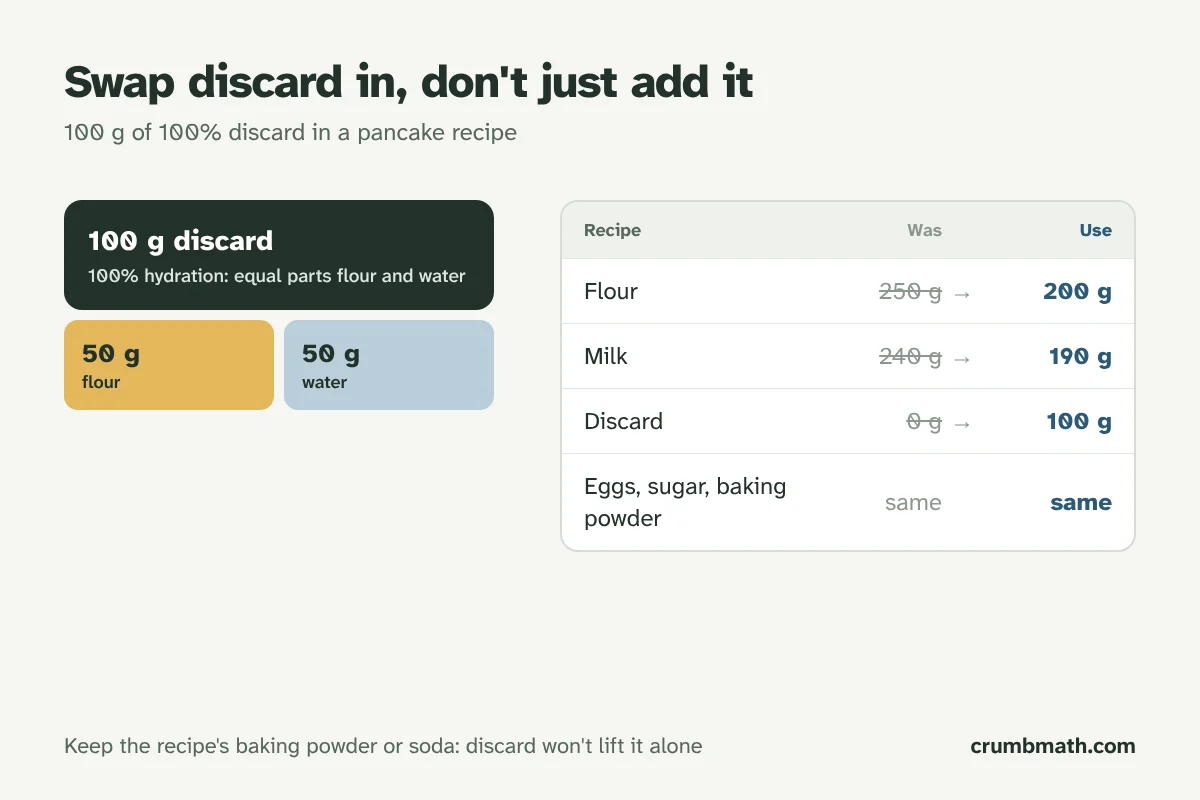
Sourdough discard is the part of your starter you remove before feeding it. It is not waste and not a special ingredient: it is flour and water that has been fermenting. Once you know how much of each it contains, you can add it to almost any recipe that has flour and liquid, as long as you take the same amount of flour and liquid out.
Why there is discard at all
Each time you feed a starter, you keep a small amount and add fresh flour and water. If you never removed any, the jar would double or grow several times over with every feed. Removing some keeps the amount manageable and keeps the ratio of fresh food to old culture under control. The starter feeding ratios guide explains how that ratio sets the starter’s timing.
What is inside discard
Discard has the same hydration as your starter. Hydration is water divided by flour, so a 100% starter is equal weights of each.
| 100 g of discard at | Flour | Water |
|---|---|---|
| 100% hydration (equal parts) | 50 g | 50 g |
| 50% hydration (stiff) | 67 g | 33 g |
| 125% hydration (runny) | 44 g | 56 g |
The formula: flour = discard ÷ (1 + hydration), and water is the rest.
How to add it to a recipe
The mistake most people make is stirring discard into a recipe as an extra. That adds flour and liquid the recipe never asked for, so batters get thick and doughs get wet. Instead, swap it in:
- Weigh the recipe’s flour and main liquid (water or milk).
- Work out the flour and water in your discard.
- Subtract the discard’s flour from the recipe’s flour, and the discard’s water from the recipe’s liquid.
- Add the discard. Leave every other ingredient as written.
For a pancake recipe with 250 g flour and 240 g milk, 100 g of 100% discard means using 200 g flour and 190 g milk. The discard calculator does this for any amount and shows the most discard a recipe can take.
Recipes discard suits
Discard works best where you want flavour and tenderness rather than rise from the starter itself:
- Pancakes and waffles, where baking powder or soda does the lifting
- Crackers and flatbreads, where little or no rise is needed
- Muffins, banana bread and other quick breads
- Pizza dough or bread with added yeast, where the yeast does the rising and the discard adds flavour
In all of these, keep the recipe’s leavening. Unfed discard has little rising power of its own.
What discard changes
- Flavour. Discard adds a mild tang. Older discard, kept a few days in the fridge, is more sour than discard from yesterday’s feed.
- Acidity. If a recipe uses baking soda, the acid in discard reacts with the soda and releases gas, which can help a batter rise.
- Texture. Fermented flour often makes pancakes and quick breads a little more tender.
Storing discard
Most bakers collect discard in a covered jar in the fridge and use it within a week or two. It gets more sour and may form a layer of grey liquid on top, which you can stir back in or pour off. Throw it away if you see pink, orange or fuzzy mould, or if it smells rotten rather than sour.
Common questions
Can I turn discard back into a starter? Yes. Discard is starter; feed some of it as you would your starter and it will become active again, though cold, old discard may take a feed or two.
Can I use active, just-fed starter instead of discard? Yes. It has the same flour and water, so the swap is identical. It just adds more rising power.
Does it matter what flour my starter uses? For swapping, only the weights matter. A rye or whole wheat starter adds a stronger flavour and absorbs a little more liquid, so add a splash of extra liquid if the batter seems thick.